

 Facebook
 X
X
 Pinterest
 Copy Link
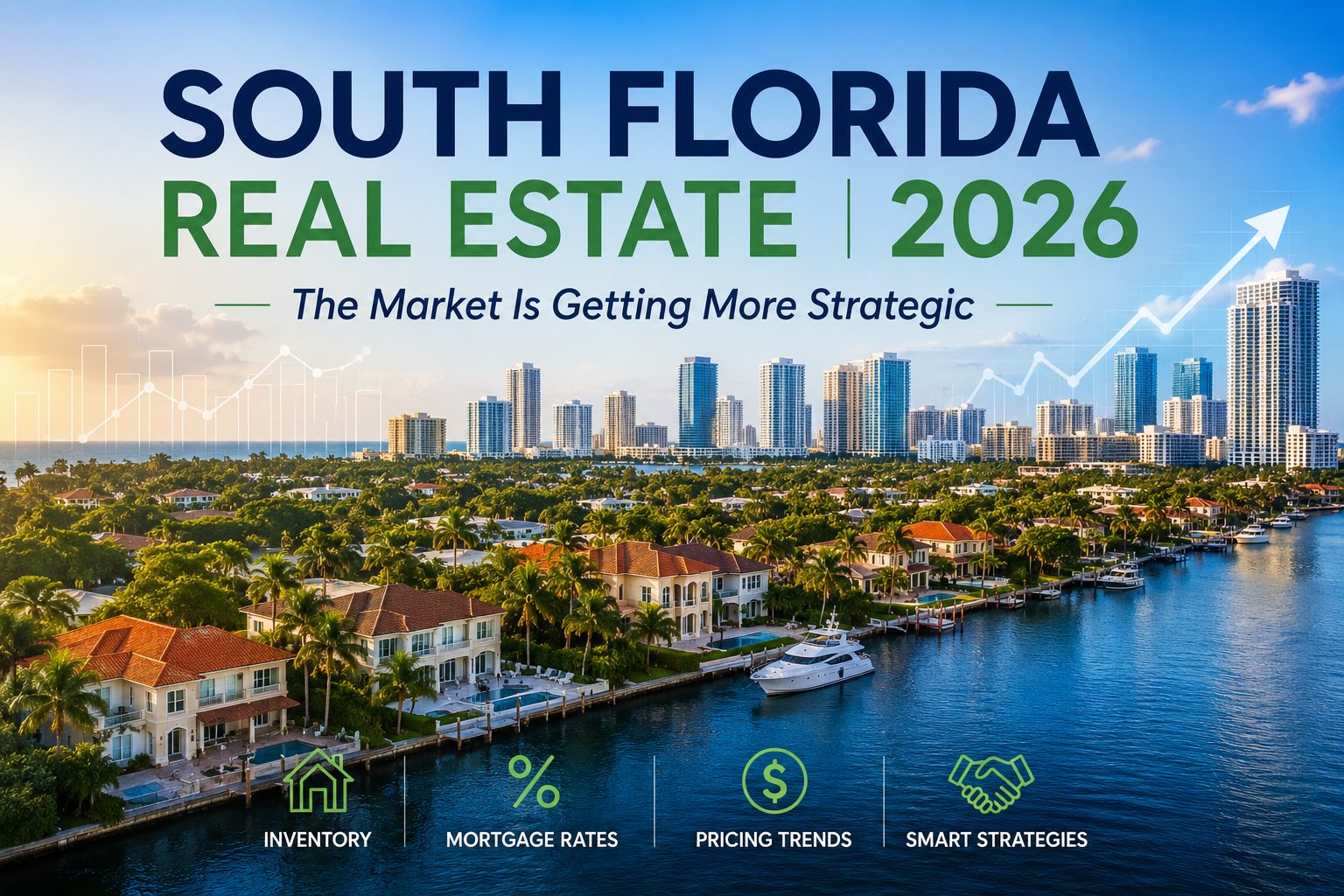
If you have been waiting for mortgage rates to fall before buying or selling a home in South Florida, you are certainly not alone.
Mortgage rates have remained one of the biggest factors influencing the housing market since the dramatic shift away from the ultra-low rates of the pandemic era. And while there is plenty of discussion about what the Federal Reserve and federal government can do to bring rates down, the reality is more complicated.
So, what would it actually take to lower mortgage rates—and what would falling rates mean for buyers and sellers in South Florida real estate?
Mortgage Rates Are Influenced by More Than the Federal Reserve
One of the biggest misconceptions about mortgage rates is that the Federal Reserve directly sets the rate consumers receive on a 30-year fixed mortgage.
It doesn’t.
The Federal Reserve controls the federal funds rate, which influences short-term borrowing costs throughout the economy. But 30-year mortgage rates are much more closely tied to the bond market, particularly the yield on the 10-year U.S. Treasury.
That distinction matters.
As HousingWire recently noted, mortgage spreads have helped keep mortgage rates below 7% despite elevated Treasury yields. In other words, even when the broader economic environment is putting upward pressure on borrowing costs, mortgage rates don’t necessarily move in lockstep with the Fed.
Inflation expectations, government borrowing, economic growth, geopolitical events and investor demand for bonds can all influence where mortgage rates ultimately land.
So What Can the Government Do?
There are several tools policymakers can use to influence the broader economic environment, including managing government debt issuance, fiscal policy and efforts to stabilize inflation.
The Treasury Department can also influence the bond market through its debt-management strategy. Recent Treasury actions have demonstrated that policymakers are paying close attention to elevated yields and the cost of borrowing.
But there is an important limitation:
The government cannot simply flip a switch and set 30-year mortgage rates at 5%.
For mortgage rates to fall sustainably, investors generally need to become more comfortable with inflation and economic risk. A sustained decline in Treasury yields can then create room for mortgage rates to move lower.
That is why the path to lower mortgage rates can be unpredictable.
What Does This Mean for South Florida Buyers?
This is where the national conversation becomes much more interesting for local buyers.
South Florida is not a single housing market.
The dynamics in Fort Lauderdale and Broward County can look very different from Miami-Dade or Palm Beach County. Even within the same county, a single-family home, a downtown condo and a waterfront property can have very different levels of demand and inventory.
Recent data shows that South Florida’s housing market has continued to move despite elevated mortgage rates.
According to Florida Realtors, Florida recorded its 11th consecutive month of year-over-year increases in closed sales in July 2026. Single-family sales increased by more than 5%, while condo and townhouse sales increased 11%.
South Florida has also seen continued sales momentum. Miami REALTORS® reported that July home sales increased 8.6% year over year, with active inventory down 18% from a year earlier.
That is important because it tells us something about today’s buyers:
People are still buying homes even without dramatically lower mortgage rates.
Some buyers have been waiting. Others have reached a point where their job, family situation, relocation plans or financial circumstances matter more than trying to perfectly time interest rates.
For someone relocating to South Florida, waiting indefinitely for a lower rate may not necessarily be the best strategy.
What Happens If Mortgage Rates Finally Fall?
Imagine that mortgage rates move meaningfully lower.
At first glance, that sounds like an obvious win for buyers.
And it is—but there is another side to the equation.
Lower mortgage rates can increase purchasing power because the monthly payment on a given loan amount becomes more affordable.
But if rates fall quickly, more buyers may enter the market at the same time.
That can create additional competition for desirable homes.
In South Florida, where desirable neighborhoods, waterfront properties, well-maintained single-family homes and certain price points can have limited inventory, increased buyer demand could put upward pressure on prices.
In other words, a lower mortgage rate does not automatically mean that buying a home becomes dramatically cheaper.
You could potentially get a lower interest rate while simultaneously paying a higher purchase price.
The South Florida Inventory Story Matters
This is one reason buyers should look beyond mortgage rates alone.
Recent July data showed that Broward County’s single-family market had approximately 4.3 months of supply, while Palm Beach County had approximately 3.7 months. The condo market had considerably more supply, giving buyers more selection and negotiating opportunities in many areas.
That creates different opportunities depending on what you are buying.
A buyer shopping for a South Florida single-family home may face a very different negotiating environment than someone shopping for a condominium.
And that distinction matters when deciding whether to buy now or wait.
What About South Florida Sellers?
For homeowners thinking about selling, lower mortgage rates could bring another wave of potential buyers into the market.
That’s potentially good news.
More buyers can mean more showings, more offers and stronger demand for well-priced homes.
But sellers shouldn’t assume that lower rates will automatically create a bidding war.
Today’s buyers are much more payment-conscious than they were several years ago. Property insurance, taxes, HOA fees, maintenance costs and the overall monthly payment all factor into affordability.
That is especially important in South Florida.
A buyer isn’t simply asking, “What’s the mortgage rate?”
They’re asking:
“What will it actually cost me every month to own this home?”
Should You Wait for Mortgage Rates to Drop?
This is probably the biggest question South Florida buyers are asking.
The honest answer is: it depends.
If you are financially comfortable, have stable income, have appropriate cash reserves and have found a home that fits your needs, waiting solely for a lower mortgage rate may not always be the best strategy.
Mortgage rates can change.
Home prices can change.
Inventory can change.
And your personal circumstances can change.
One strategy buyers sometimes consider is purchasing when the home and overall transaction make sense, then refinancing later if mortgage rates become more favorable.
Of course, refinancing is never guaranteed, and there are costs and qualification requirements involved. A mortgage professional can help determine whether that strategy makes sense for your individual situation.
The bigger point is that trying to perfectly time the mortgage market can be just as difficult as trying to perfectly time the housing market.
The Bottom Line for South Florida Real Estate
There are things the federal government and Treasury can do to influence economic conditions and the bond market, but there is no simple button that lowers 30-year mortgage rates.
Mortgage rates ultimately depend on a combination of inflation, Treasury yields, economic growth, investor expectations and broader financial-market conditions.
And while lower rates would certainly provide relief to South Florida buyers, the impact would likely extend beyond monthly payments.
Lower rates could bring more buyers into the market, potentially increasing competition for desirable properties and putting upward pressure on prices.
That is why South Florida real estate decisions should be based on more than mortgage rates alone.
If you’re thinking about buying, selling or relocating to Fort Lauderdale, Broward County, Palm Beach County or Miami-Dade County, look at the entire picture: your monthly payment, available inventory, home prices, property taxes, insurance, HOA costs and your long-term plans.
The perfect mortgage rate may be impossible to predict.
The right real estate strategy, however, can be planned.
If you’re curious what today’s market means for your specific home or buying power, a local South Florida real estate professional can help you evaluate the numbers and determine whether waiting—or making a move now—makes the most sense for you.


