

 Facebook
 X
X
 Pinterest
 Copy Link
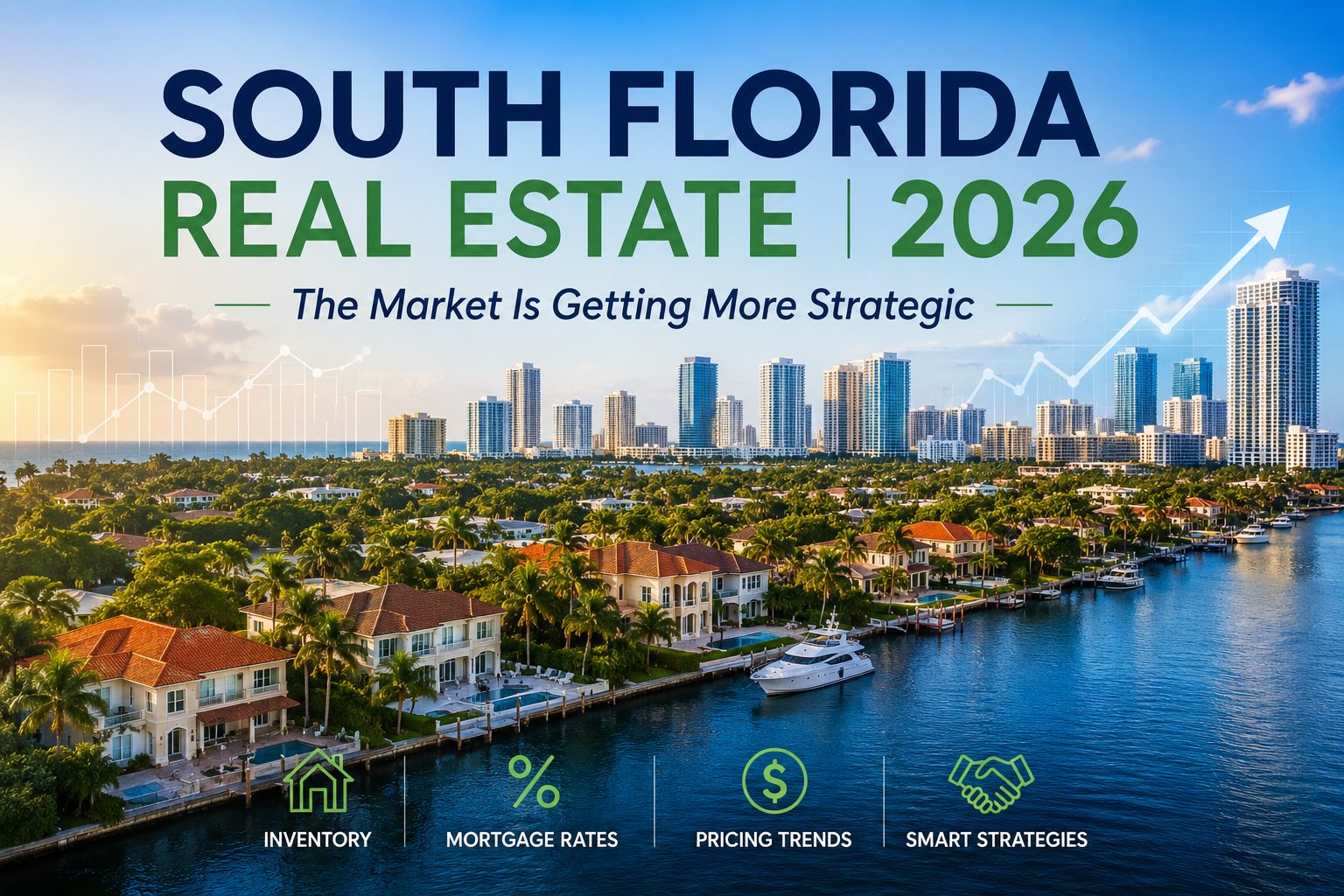
If you’ve been following the national housing market headlines, you may be getting mixed messages.
Mortgage rates remain elevated. Inventory is gradually changing. Buyers are still concerned about affordability. Sellers are adjusting their expectations. And depending on where you look, the housing market can appear either surprisingly resilient or noticeably slower than it was a few years ago.
But there is one important lesson emerging in 2026:
The housing market is becoming increasingly local.
That matters tremendously in South Florida.
Miami-Dade, Broward and Palm Beach counties don’t necessarily behave like the national housing market — and even communities within those counties can experience very different levels of demand, inventory and pricing.
Recent HousingWire analysis found that national inventory has edged higher in August while mortgage rates remain above 6.64%, creating some additional pressure on demand. Yet the broader market has continued to function rather than collapse.
For South Florida buyers and sellers, the takeaway isn’t to panic.
It’s to become more strategic.
South Florida Real Estate Isn’t One Market
One of the biggest mistakes buyers and sellers can make right now is assuming that a single headline tells the entire story.
“Florida real estate is slowing.”
“Home prices are falling.”
“Buyers have all the leverage.”
“There’s no inventory.”
Depending on the property, location and price range, all of those statements could be partially true — or completely misleading.
HousingWire’s review of the first half of 2026 found that the housing market increasingly resembles a normal market rather than the extreme conditions seen during the pandemic years. More importantly, the data shows that local market fundamentals are becoming increasingly important.
That is particularly true in South Florida.
A waterfront property in Fort Lauderdale isn’t competing for the same buyer as a starter home in western Broward County.
A downtown Miami condominium isn’t necessarily experiencing the same demand as a single-family home in Coral Gables.
A Palm Beach County property priced at $600,000 can have a completely different buyer pool from a $2 million property.
Price point matters. Property type matters. Location matters.
And increasingly, accurate pricing matters more than ever.
Buyers Have More Choices — But Affordability Still Matters
The pandemic-era housing market trained buyers to move quickly.
Multiple offers were common. Sellers had tremendous negotiating power. Properties could receive significant attention almost immediately after hitting the market.
Today’s South Florida buyer is operating differently.
Higher mortgage rates have changed the monthly-payment equation, while property taxes, homeowners insurance, association fees and other ownership costs can have a significant impact on affordability.
That means buyers aren’t simply asking:
“Can I afford this house?”
They’re asking:
“What will it actually cost me every month to own this home?”
That’s a much more sophisticated question.
For buyers considering South Florida, the true cost of ownership may include:
- Mortgage principal and interest
- Property taxes
- Homeowners insurance
- Flood insurance where applicable
- HOA or condominium fees
- Maintenance and repairs
- Special assessments
- Utilities
- Potential future insurance increases
This is one reason two properties with the same purchase price can have dramatically different monthly costs.
Sellers Need to Pay Attention to Pricing
Florida sellers are also navigating a market that demands more pricing discipline.
HousingWire reported earlier this year that roughly 44% of Florida listings had experienced price reductions, significantly higher than the national percentage at the time. HousingWire also noted that Miami was somewhat of an outlier, with a lower share of price reductions than Florida overall.
That distinction is important.
It doesn’t mean every South Florida seller needs to slash their asking price.
It means sellers need to understand how their specific property compares with the competition.
The question isn’t:
“What did my neighbor list their house for?”
And it isn’t necessarily:
“What did homes sell for during the pandemic?”
The better question is:
“What does today’s buyer see as competitive for this specific property?”
That requires looking at recent comparable sales, current competition, pending activity, days on market, price reductions and the unique characteristics of the property.
Condos Require an Even Closer Look
South Florida’s condominium market deserves its own conversation.
Condo buyers aren’t simply evaluating square footage, location and finishes anymore.
They are also paying close attention to:
- HOA fees
- Building reserves
- Structural inspections
- Milestone inspection requirements
- Special assessments
- Insurance
- Building maintenance
- Financing requirements
- Rental restrictions
- Overall financial health of the association
HousingWire has noted that Florida’s condominium market continues to experience some of the effects of post-Surfside regulations, higher ownership costs and changing buyer expectations.
For buyers, this creates an important opportunity — but also a reason to conduct additional due diligence.
A condominium that appears inexpensive compared with surrounding properties may not necessarily be the better value once association finances and ownership costs are considered.
Miami Continues to Stand Apart
South Florida also demonstrates why national housing statistics can be misleading.
HousingWire recently examined Miami’s “tale of two” housing markets, highlighting the differences between segments of the market and the continuing influence of migration, international demand, limited supply and wealth creation.
Miami’s luxury and single-family markets can behave very differently from portions of the condominium market.
And that same principle extends throughout South Florida.
The Miami market isn’t necessarily the Fort Lauderdale market.
Fort Lauderdale isn’t necessarily Boca Raton.
Boca Raton isn’t necessarily Boynton Beach.
And even within the same city, different neighborhoods and price ranges can tell completely different stories.
What Does This Mean for South Florida Buyers?
For buyers, 2026 may offer something that was difficult to find during the pandemic-era market:
time.
In many situations, buyers have more opportunities to compare properties, negotiate terms and evaluate a home before making a decision.
That doesn’t mean every property is negotiable.
Well-priced homes in desirable locations can still attract strong demand.
But buyers should be less focused on trying to “time the market” and more focused on finding the right property at a price and monthly cost that makes sense for their individual situation.
A good buying strategy may include:
- Get fully pre-approved before shopping seriously.
- Understand your total monthly ownership cost.
- Compare multiple properties rather than focusing on one.
- Analyze recent comparable sales.
- Investigate insurance and HOA costs.
- Pay attention to days on market and price reductions.
- Understand the neighborhood’s long-term fundamentals.
- Negotiate based on data rather than emotion.
What Does This Mean for South Florida Sellers?
For sellers, preparation and positioning may be more important than simply choosing an asking price.
A property that is overpriced can sit on the market while competing homes attract the buyers.
Eventually, the seller may have to make a larger price adjustment than they would have needed if the property had been positioned correctly from the beginning.
The goal isn’t necessarily to be the cheapest house on the market.
The goal is to be the most compelling option within your competitive set.
That can involve pricing, presentation, marketing, photography, staging, property condition and understanding exactly who the likely buyer is.
The Biggest Opportunity: Know Your Local Market
The biggest takeaway from the 2026 housing market may be surprisingly simple:
National housing headlines are becoming less useful for making local real estate decisions.
HousingWire’s recent market analysis reinforces the idea that housing performance is increasingly influenced by local conditions, inventory and affordability rather than one national narrative.
That’s particularly important here in South Florida.
Whether you’re considering a home in Miami-Dade, Broward or Palm Beach County, the most useful information is the information connected to your property, your neighborhood, your price range and your financial goals.
That’s where working with a local real estate professional can make a difference.
Thinking About Buying or Selling in South Florida?
The South Florida real estate market isn’t simply “hot” or “cold.”
It’s segmented, evolving and increasingly strategic.
For buyers, that can create opportunities to negotiate and make more informed decisions.
For sellers, it creates an even greater need for accurate pricing and effective positioning.
And for both, the smartest approach is to look beyond the headlines and understand what’s actually happening in the specific market where you’re planning to buy or sell.
Considering a move in Miami-Dade, Broward or Palm Beach County?
Better Homes and Gardens Real Estate Florida 1st can help you understand the numbers behind your local market and develop a strategy based on your specific goals.
Don’t rely on a national housing headline to make a local real estate decision.
Let’s look at your South Florida market together.


